Howdy, Stranger!

It looks like you're new here. If you want to get involved, click one of these buttons!

Here's a statement of the obvious: The opinions expressed here are those of the participants, not those of the Mutual Fund Observer. We cannot vouch for the accuracy or appropriateness of any of it, though we do encourage civility and good humor.
  • Advisor Expectations/Experiences
    Just wanted to get this learned community’s input on our situation.
    A couple years ago, due to a number of fortuitous events, Mrs. Ruffles acquired a significant amount of cash that she parked at Fido for convenience’s sake. Due to the overheated markets, she’s been reluctant to invest it for fear of incurring a substantial loss. A much more significant amount of funds is fully invested in her retirement accounts here and elsewhere. Her salary more than covers her annual expenses.
    When she first acquired her cash, she was in touch with her Fido advisor but decided it was better to do nothing than rush into something. The advisor recently reached out to her so we had a teleconference with him. We thought he might have some ideas but he kept expecting us to drive the conversation.
    I mentioned that it wasn’t imperative to invest all the cash right away due to her other investments and that, if she were to invest, our concerns included downside protection and tax minimization. He mentioned dollar cost averaging, Fido’s wealth management service and separately managed accounts, outside advisors Fido works with, and tax-loss harvesting.
    It was all very generic so I asked that he forward us more details on some of the strategies he mentioned. In response, he emailed us links to the website pages on wealth management services, managed accounts, and planning services - nothing I hadn’t seen before. To say the least, we were both underwhelmed.
    I responded asking for more details (performance, risk, costs, etc.) on the strategies he mentioned so that we could make some informed decisions. After two days, crickets - not even a simple acknowledgement.
    Am I expecting too much or should this be in the advisor’s wheelhouse? What have others experienced in working with advisors at Fido and other brokers?
    *************
    Somehow, over the years, I'd already half-way expected the kind of "service" you've received. A ONE-TIME in-person visit to a brick-and-mortar office with a BofA-Merrill Lynch guy was very helpful to me in evaluating my holdings at the time, many yeas ago. Since my friend was this guy's client, my friend asked if the fellow couldn't find time to see me for an hour. He did it for me at no charge. He was attentive, sharp, listened a good deal. But my pot was not very big. He offered to take on the job of managing my investments via one of his associates in the office. But only if I could get it up to $100k. I was not far away from that figure, back then. He offered to follow up with fund recommendations, and he did, via email. He wanted to run them past me, and I could see that they would have been fitting, but not my choices..... I guess I just needed to keep the control. I use some personal filters that others just would never bother with. So, the meeting was valuable, confirming that I had not already run my money off a cliff into oblivion, and so staying the course was in order. I was very grateful to him for his time, and told him so. .....I DO think that not rushing to do something, anything--- is a GREAT idea. And yes, I'd have expected more. But then, always and immediately, I must remind myself these days that wherever I turn, substantive communication is never the goal. Otherwise, we'd not always hear a RECORDING telling us our call is important. And people who are supposed to be of service to us would actually be able to think and communicate, not just send hyperlinks to webpages. .....Just this morning, I played my part, attempting to get in touch with those for whom actual communication is not a priority. But of course, what can you expect from their end? They've shown their hand already. I don't really matter to them. No one does, unless you happen to get lucky and catch the call at THEIR convenience.
  • Advisor Expectations/Experiences
    This is such a tough question to answer given the gracious but limited info provided. There are so many variables to consider. It's interesting that Mrs. acquired a significant amount recently but is afraid to "risk" this even though a more significant amount is already invested in retirement accounts. One would think that if it was a large amount but an amount much less than already invested - one would be less fearful on the risk part. The bigger question IMHO is what is happening in the next 5-10 years. Is there an expectation to draw from the retirement accounts? When you say "parked" - do you mean in a money market or an S&P 500 Index account? If you explained that tax minimization and downside protection was most important to you (curious) - then it makes sense that tax loss harvesting and dca would be entertained.
    All that said, your advisor should consider your entire portfolio and make recommendations on this new $ given the whole strategy/plan. They should provide you with an in depth "education" of WHY... so that you may make an informed decision. They should educate you so that you are well informed to decide. They should not tell you what you should do. I have had very positive experiences with Fid advisors over the years. But, like Dentists and Doctors, all have a different manner... you just have to find the right one that is a partner and explains and is patient. If someone sends you web links without a thoughtful conversation/explanation etc. - then you must move on to another advisor. IMHO. Hope this is helpful.
  • De-accumulation phase
    The Retirement Manifesto has a number of good articles...here's one:
    10-steps-to-make-sure-you-have-enough-money-to-retire-2/
  • Advisor Expectations/Experiences
    Just wanted to get this learned community’s input on our situation.
    A couple years ago, due to a number of fortuitous events, Mrs. Ruffles acquired a significant amount of cash that she parked at Fido for convenience’s sake. Due to the overheated markets, she’s been reluctant to invest it for fear of incurring a substantial loss. A much more significant amount of funds is fully invested in her retirement accounts here and elsewhere. Her salary more than covers her annual expenses.
    When she first acquired her cash, she was in touch with her Fido advisor but decided it was better to do nothing than rush into something. The advisor recently reached out to her so we had a teleconference with him. We thought he might have some ideas but he kept expecting us to drive the conversation.
    I mentioned that it wasn’t imperative to invest all the cash right away due to her other investments and that, if she were to invest, our concerns included downside protection and tax minimization. He mentioned dollar cost averaging, Fido’s wealth management service and separately managed accounts, outside advisors Fido works with, and tax-loss harvesting.
    It was all very generic so I asked that he forward us more details on some of the strategies he mentioned. In response, he emailed us links to the website pages on wealth management services, managed accounts, and planning services - nothing I hadn’t seen before. To say the least, we were both underwhelmed.
    I responded asking for more details (performance, risk, costs, etc.) on the strategies he mentioned so that we could make some informed decisions. After two days, crickets - not even a simple acknowledgement.
    Am I expecting too much or should this be in the advisor’s wheelhouse? What have others experienced in working with advisors at Fido and other brokers?
  • Recommendations for new fund house?
    Interesting.
    I did one “in-kind” today (TMSRX). The others today were of the short-term bond variety. Just liquidated them and will see what Fidelity’s funds look like. IRAs necessitated signing and mailing paperwork (which they prepared). The non-retirement money seemed to go through online.
    All made easier by the good folks here at mfo …
  • Recommendations for new fund house?
    Appreciate the notes @mef / @MikeM,
    “D&C funds are transaction fee funds, but once you have positions in the funds at Fidelity (via transfer in kind), it may be possible to add more shares for a $5 fee and sell with no fees.”
    - Just out of curiosity (being pretty much in the dark) when doing a TIK (transfer in kind) I assume there’s no charge? Or … is the charge waived only for NTIF funds?
    - Re PRWCX … Since I have it now in a traditional IRA, may I assume (1) I can do a TIK to fidelity and (2) my ability to buy and sell shares will continue (as long as I don’t close the account) ?
    -
    This will be a gradual process.
    The recent issue involved their ignoring the Michigan W-4P (withholding opt-out form) which I have faithfully completed and mailed to them every January 1 for about a decade (ever since Michigan began mandatory withholding) along with a typewritten letter and list of funds affected.
    For whatever reason, yesterday they withheld Michigan tax from one of the two distributions. My transaction was a pretty routine process. Simply exchanging from 2 IRA funds into a single non-retirement money market fund. There’s a check-off box to decline federal w/h - but not for state. According to their phone rep this morning having a W-4P on file is no longer adequate. The distribution request must also be presented to them in a phone call or by letter for the W-4P to be honored. “Why-Oh-Why just the one fund?” (I asked). Why was the second distribution not hit with the same withholding! Answer: “That was a one-time occurrence” (ie: an accident).
    At this point I’m holding my breath hoping they don’t go back and pull tax out of the unafflicted fund.
    Ahhh …
  • DGI Balanced Fund closed to new investors
    https://www.sec.gov/Archives/edgar/data/1843841/000158064221002475/dgi497s.htm
    (DGTIX, DGINX, DGIBX)
    497 1 dgi497s.htm 497
    SUPPLEMENT DATED MAY 24, 2021
    TO THE PROSPECTUS
    AND STATEMENT OF ADDITIONAL INFORMATION
    DATED MAY 21, 2021
    OF DGI BALANCED FUND (the “Fund”)
    (a series of the DGI Investment Trust)
    Effective May 24, 2021, the Fund will be closed to new investors and, except as discussed below, will be closed to new sales until further notice. Existing investors who had a pre-existing periodic investment plan through their individual retirement account (“IRA”) or who submitted a rollover request on or before May 17, 2021 may continue to invest in accordance with that plan or rollover request. Also, existing investors who hold their shares in the Fund through an IRA will continue to have their dividends and other distributions reinvested in the Fund. The Fund may restrict, reject or cancel any purchase order and reserves the right to modify this policy at any time.
    Please Retain This Supplement For Future Reference.
    _________________________________________________________________________________________________________
    http://www.dgifund.com/
  • Recommendations for new fund house?
    Hank, yes; I noted about mis-pricing during some time periods for muni bonds vs taxable bonds. I considered several years ago an investment in NHMRX, but other sector investments were performing nicely and the transaction didn't happen. All of my accounts are either T or Roth IRA's, and the online buy (muni fund) wouldn't have been processed.
    Below, is the current message returned when attempting to buy a muni fund for a T or Roth IRA at Fidelity. All online buys require a "preview the trade" before being processed. As @msf noted, the message doesn't prevent the transaction in total, but not via electronic channels.
    ----- (010386) The security you are attempting to trade is a tax-free mutual fund. Retirement accounts are prevented from buying or exchanging into tax-free mutual funds through the electronic channels. For more information, contact a Fidelity representative at 800-544-6666. -----
    @Crash. It is not stated in this thread that you can not have a muni investment in an IRA; but that you can not process the transaction electronically.
  • Recommendations for new fund house?
    “ISTR that Fidelity doesn't allow the purchase of municipal bond funds in traditional or roth iras. In fact, my purchase of FSTFX for both my ira accounts was just denied by Fidelity !”
    Don’t like the sound of that last sentence (though I practice denial all the time). :)
    “TOD” (Transfer on Death) is the code TRP uses for non-retirement accounts. I wondered about that myself years ago when I began making deposits from my bank account into one of their cash equivalent funds. Some of the money in the TOD account more recently came from RMD money that wasn’t needed at the time. I like PRIHX (despite rather low ratings) and have been building the balance in that TOD account as an adjunct to other retirement savings.
  • Recommendations for new fund house?
    I am glad to hear of the TRP issues as I was thinking of moving some of their funds I own at Fidelity to TRP directly.
    I have had accounts at Schwab, Fidelity and Vanguard for years and can offer the following
    Vanguard is clunky, irritating and putting up more and more restrictions on nonV funds. Major advantage is only place I know of to get Admiral funds. Best used for only Vanguard funds. No dedicated personal rep, rather now a "team", unless you pay for advisor. Occasionally there are funds here I can't get anywhere else. Still have my wife's money in mutual fund account, rather than brokerage. Lot's of complaints in Vanguard Advisor news letter about back office service, mistakes in accounting etc.
    Schwab has good list of most funds, lots of Load funds without load, but $25 more expensive as noted than Fido for fees. Good customer service, can get a single rep if you want who will call you occasionally to see if he/she "can help". Web site not as easy to navigate as FIDO
    Fido has better graphs and data on positions and an easiest website. Very easy transfers from other brokerages, all done electronically. Have never used their personal reps, although they pester us all the time to "sign up".
    I don't like to have all my assets in one basket, but if I had to pick one would go with Fido, with Schwab close second.
    I was always a little leery about having to use a private firm ( Fidelity) that did not have to report their finances to the public. I am not sure if this is still a big issue, as Fido has massive amounts of retirement accounts and these folks probably watch things pretty carefully. However, you will not be told if there are problems, if you do not participate in a massive 401k ( My wife got stuck in a busted 401k years ago). Vanguard is just as opaque, as their mantra of " the fund investors own the firm" is window dressing only as fund investors do not get to elect the board or vote on salaries etc.
  • When to take Social Security
    Check out this open source SS strategy calculator that take all these various permutations into account: https://opensocialsecurity.com/

    I was thinking 65 or 66....
    ------------
    The strategy that maximizes the total dollars you can be expected to receive over your lifetime is as follows:
    You file for your retirement benefit to begin 1/2029, at age 69 and 3 months.
  • When to take Social Security
    >> Absent COLA adjustments, the real value of waiting would be substantially less,
    ?
    8% annually has appeal in an absolute sense, inflation and CoLA aside, most suggest.
    Is there literature on claiming early because of inflation calculations?
    (CoLA history is here: https://www.ssa.gov/oact/cola/colaseries.html)
    Fido lays out the usual scenarios:
    https://www.fidelity.com/viewpoints/retirement/social-security-at-62
    including (obviously)
    ... your annual cost-of-living adjustment (COLA) is based on your benefit. So if you begin claiming Social Security at 62 and start with reduced benefits, your COLA-adjusted benefit will be lower too.
    As for
    >> While it may seem that inflation is outstripping COLA, it's worth taking a close look at everything, ...
    yup,
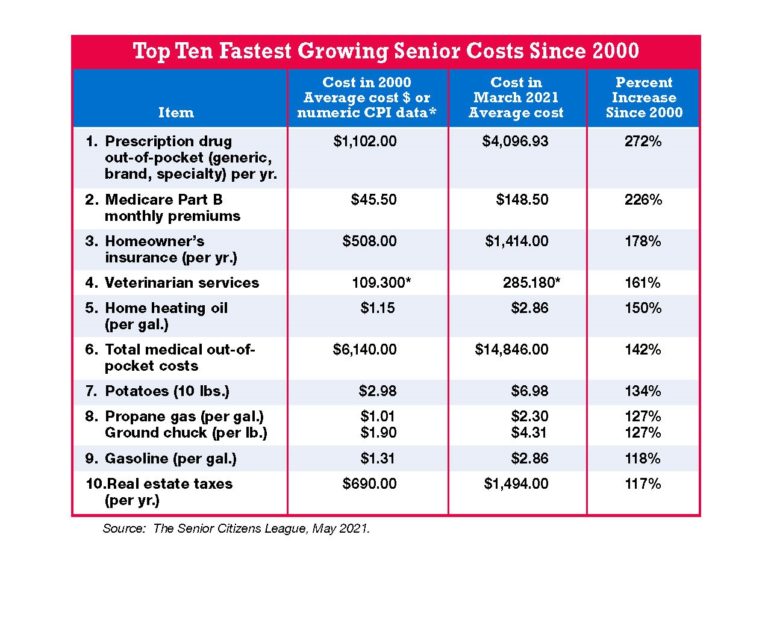
    The Consumer Price Index (CPI) is a measure of the average change over time in the prices paid by urban consumers for a market basket of consumer goods and services. Indexes are available for the U.S. and various geographic areas. Average price data for select utility, automotive fuel, and food items are also available.

    while my cohort, and not only at spring town meetings (for an expensive town), always includes property taxes in any discussion.
    This might interest those who want to get deep in the grass and weeds.
    http://www.thebillionpricesproject.com/
  • Fidelity’s Pitch to America’s Teens - No-Fee Brokerage / WSJ
    “Fidelity Investments Inc. plans to open the door to a new generation of investors who will be able to trade stocks even before they learn how to drive or head to college. Fidelity said Tuesday it will issue debit cards and offer investing and savings accounts to 13- to 17-year-olds whose parents or guardians also invest with the firm. The accounts will let teens buy and sell U.S. stocks, Fidelity mutual funds and many exchange-traded funds. Similar to how it works for adults, the service won’t charge account fees or commissions for online trading.
    “The offering marks Fidelity’s latest move to position itself as a lifelong financial adviser to millions of Americans. Once known for the stock-picking mutual funds it sold through other brokers, the firm has spent the past few decades building direct connections to individual investors. Today, Fidelity runs one of the world’s biggest brokerages and the nation’s largest servicer of 401(k) plans and other retirement accounts offered by employers.
    “Fidelity and other major wealth managers slashed their stock-trading commissions to zero in recent years. Eliminating those costs had set the stage for the industry’s banner 2020, when many individual investors rediscovered the allure of trading stocks. Many brokerage and wealth-management firms reported a surge in enthusiasm and new accounts, especially among younger participants. Fidelity is among them. In the first three months of 2021, the company added 1.6 million accounts from investors 35 years old or younger—more than triple the number of new accounts from that demographic a year earlier, Fidelity said.”

    The Wall Street Journal - May 19, 2021
  • Harbor Mid Cap Growth Fund changes
    https://www.sec.gov/Archives/edgar/data/793769/000119312521166201/d168244d497.htm

    111 South Wacker Drive, 34th Floor
    Chicago, IL 60606-4302
    harborfunds.com
    Supplement to Statement of Additional Information dated March 1, 2021
    May 19, 2021
    Harbor Mid Cap Growth Fund
    The Board of Trustees of Harbor Funds (the “Board”) has approved a change in Harbor Mid Cap Growth Fund’s (the “Fund”) name and principal investment strategy, together with certain related changes. Effective on or about September 1, 2021 (the “Effective Date”), the Fund will be renamed the Harbor Disruptive Innovation Fund and will no longer have a policy to invest, under normal market conditions, at least 80% of its net assets, plus borrowings for investment purposes, in securities of mid cap companies. As of the Effective Date, the Fund will seek to invest in what it believes to be disruptive and innovative companies of any market capitalization. The Fund’s benchmark index will change from Russell Midcap® Growth Index to the S&P 500 Index and the Russell 3000® Growth Index. There will be no change in the Fund’s investment objective.
    In connection with the changes noted above, Wellington Management Company LLP will no longer serve as the Fund’s suabadviser as of the Effective Date. Instead, the Fund will employ a multi-manager approach to seek to achieve its investment objective, whereby Harbor Capital Advisors, Inc. (the “Adviser”), the Fund’s investment adviser, will manage the Fund’s assets based upon model portfolios provided by multiple non-discretionary subadvisers. The Board has appointed 4BIO Partners LLP (pending approval of its registration as an investment adviser with the Securities and Exchange Commission), NZS Capital, LLC, Sands Capital Management, LLC, Tekne Capital Management, LLC and Westfield Capital Management Company, L.P. to serve as subadvisers to the Fund as of the Effective Date.
    The Adviser will, starting on the Effective Date, reposition the Fund’s portfolio in accordance with the new investment strategy for the Fund. In connection therewith, the Fund expects to experience portfolio turnover, which will result in higher than normal transaction costs to shareholders and may also result in the realization and/or distribution of higher capital gains than might generally be expected under normal circumstances.
    In connection with the changes described above, the rate of advisory fees payable by the Fund to the Adviser will be reduced as of the Effective Date from 0.75% to 0.70% annually as a percentage of the Fund’s average net assets. In addition, as of the Effective Date, the Adviser has contractually agreed to limit the Fund’s operating expenses, excluding interest expense (if any), to 0.50%, 0.58%, 0.83%, and 0.94% for the Retirement Class, Institutional Class, Administrative Class, and Investor Class, respectively, through August 31, 2022.
    An amended and restated Statement of Additional Information will be available for the Fund on the Effective Date.
    Harbor Global Leaders Fund
    Effective immediately the following information replaces the corresponding information on page 52 of the Statement of Additional Information.
    Harbor Global Leaders Fund. The Fund is subadvised by Sands Capital Management, LLC (“Sands Capital”). Sands Capital is an independent investment management firm, ultimately controlled by Frank M. Sands, Sands Capital’s CEO and CIO. Frank M. Sands controls Sands Capital by virtue of his position as, among other things, trustee, manager, or officer, respectively, of various intermediate holding entities and trusts through which voting or management rights with respect to Sands Capital are held and/or exercised.
    Investors Should Retain This Supplement For Future Reference
    S0521.SAI
  • Recommendations for new fund house?
    As with Vanguard, the question may be moot. AFAIK, one can't open a fund position directly in either family.
    Sample prospectus boilerplate:
    If you do not currently have a Fidelity ® brokerage account or a Fidelity ® mutual fund account and would like to invest in a fund, you may need to complete an application. For more information about a Fidelity ® brokerage account or a Fidelity ® mutual fund account, please visit Fidelity's web site at www.fidelity.com, call 1-800-FIDELITY, or visit a Fidelity Investor Center (call 1-800-544-9797 for the center nearest you).
    But all one finds on Fidelity.com is this list of "accounts for investing":
    Brokerage Accounts, Cash Management Accounts, HSA Accounts, and 529 College Savings Plans.
    No mutual fund accounts.
    https://www.fidelity.com/customer-service/investing
    Under Forms, if one checks "open an account" one sees a plethora of account forms, but the only two forms presented to open a vanilla, individual taxable account are a CMA (brokerage) application and a "Non-Retirement Brokerage Account for Individuals, Joint" application.
    https://www.fidelity.com/customer-service/forms-applications/all-forms
    Decades ago, Fidelity nudged all investors off of their mutual fund platform onto their brokerage platform. (Who remembers T-account numbers?) Vanguard is in the middle of that process now.
  • Recommendations for new fund house?
    What kind of minimum balance are we looking at in a brokerage cash account? Am I incorrect about that requirement? Perhaps it only applies in non retirement accounts?
  • Recommendations for new fund house?
    Here’s a list of the 50 largest houses. Some are load-based. Any stand out as worthy of consideration? The number on the right references total number of distinct fund offerings.
    SOURCE
    Retail Net Assets # of distinct funds
    1 Fidelity Investments $984,173,589,258 315
    2 Vanguard Group $962,331,327,507 148
    3 American Funds $956,584,547,987 42
    4 Franklin Templeton Investments $377,385,331,414 122
    5 T. Rowe Price & Co. $345,725,591,811 110
    6 Columbia Management $167,493,529,444 140
    7 Dodge & Cox $126,826,526,974 5
    8 OppenheimerFunds $125,473,946,434 72
    9 John Hancock Funds $119,789,419,458 225
    10 Pacific Investment Management Co. $118,411,876,036 73
    11 Invesco Ltd. $95,323,126,745 92
    12 BlackRock Inc. $90,785,119,662 116
    13 Janus Capital Group $84,717,855,431 48
    14 American Century Investments $71,948,919,961 86
    15 MFS Investment Management $71,059,542,832 74
    16 Lord Abbett & Co. $66,647,971,069 42
    17 ING Retirement $58,294,891,374 150
    18 Wells Fargo Advantage Funds $48,938,991,118 101
    19 Putnam Investments $48,697,487,901 79
    20 AllianceBernstein Inc. $48,012,344,847 74
    21 Eaton Vance Corp. $45,749,419,375 91
    22 DWS Investments $43,664,723,778 67
    23 JPMorgan Funds $43,495,216,232 108
    24 USAA $41,901,152,367 41
    25 Legg Mason Inc. $40,997,886,898 87
    26 Hartford Mutual Funds $39,801,202,624 81
    27 Dreyfus Funds $35,223,057,365 105
    28 Ivy Funds $34,953,774,009 30
    29 First Eagle Funds $34,849,628,600 5
    30 Northern Funds $34,626,707,067 51
    31 Schwab Funds $34,218,636,841 47
    32 Principal Funds $33,220,356,251 63
    33 Prudential Investments $32,560,310,174 44
    34 Thornburg Investment Management $30,706,861,162 16
    35 Royce Funds $30,583,106,754 30
    36 Russell Investments $29,943,773,637 39
    37 Artisan Funds $28,990,199,955 12
    38 Federated Investors $27,512,268,214 66
    39 Goldman Sachs Asset Management $26,350,742,126 72
    40 Pioneer Investments $24,616,061,833 37
    41 Davis Funds $24,203,544,825 8
    42 Natixis Funds $22,552,861,400 28
    43 Oakmark Funds $22,312,816,162 7
    44 Waddell & Reed Inc. $21,894,219,733 22
    45 VALIC $20,406,552,997 45
    46 TIAA-CREF $20,067,405,527 50
    47 Nuveen Investments $19,271,984,888 106
    48 Delaware Investments $18,747,941,089 64
    49 Vantagepoint Funds $18,216,359,065 29
    50 MainStay Funds $18,123,576,513 43
    Source: Morningstar