It looks like you're new here. If you want to get involved, click one of these buttons!
https://awealthofcommonsense.com/2020/06/when-should-you-sell-your-stocks/Fidelity data shows nearly one-third of their investors 65 and older sold all of their stock holdings at some point between February and May while just 18% of all investors across their platform sold out of stocks.
I had a number of discussions with investors who were contemplating selling out of stocks in March. Many we retirees who worried about how an extended downturn could impact their retirement plans.
I understand why this group is more trigger happy with their portfolio. The U.S. stock market was up 10 out of 11 years heading into 2020. This crisis was looking like it could turn into Great Depression 2.0.
We’re living in scary times.
But scary times and panic are never good reasons for selling out of your stocks.
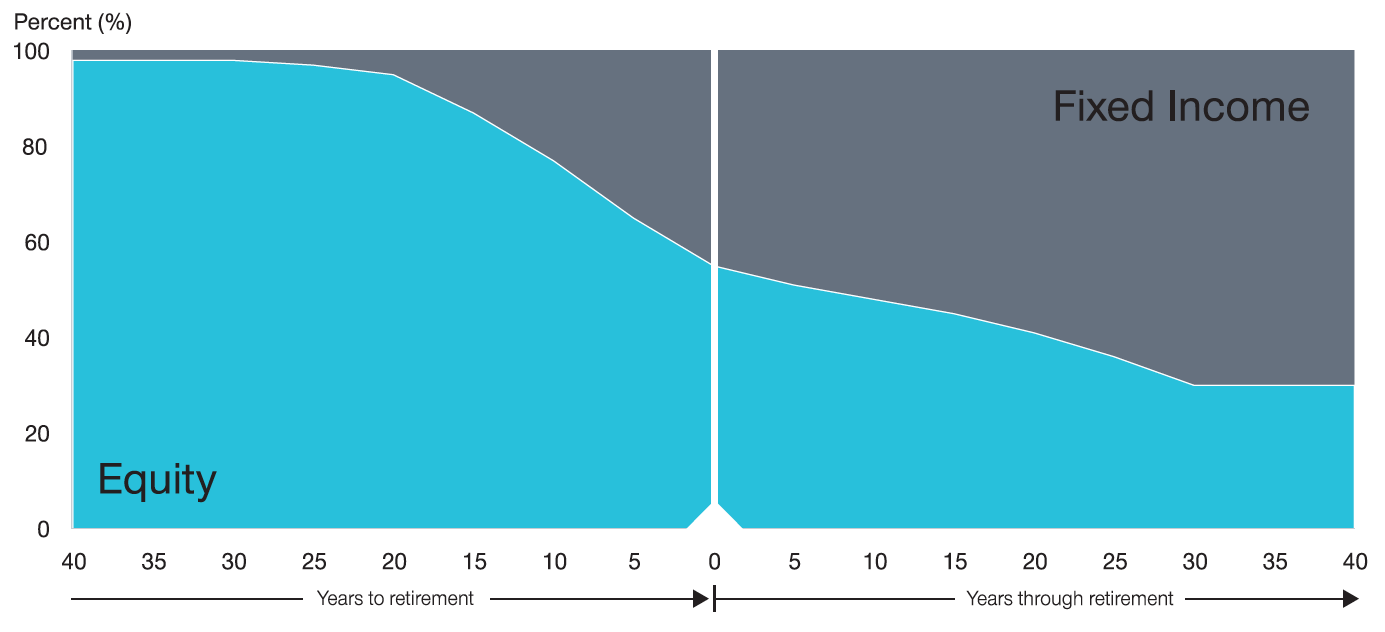
Equity %Data from Exhibit 1 in Estrada,The Retirement Glidepath: An International Perspective, The Journal of Investing (Summer 2016).
(Start->End) 100->0 0->100 90->10 10->90 80->20 20->80 70->30 30->70
---------------------------------------------------------------------------
Failure Rate 8.6% 21.0% 6.2% 17.3% 4.9% 11.1% 4.9% 8.6%
Mean $1,388 $851 $1,336 $901 $1,283 $954 $1,230 $1,009
Median $947 $171 $873 $293 $908 $424 $951 $527
Big advantage for rising equity? Plausible but not borne out. Nor as noted previously do Pfau's simulations bear this out under market conditions like today's.Pfau and Kitces (2014) find support for RE strategies during retirement and justify their findings with the notion of sequence of returns risk. ... [I]f large negative returns occur at the beginning of the retirement period, the portfolio is far more likely to be depleted than if the same returns occurred by the end of such period...This is a plausible argument and perhaps applies to the simulations discussed in Pfau and Kitces (2014). ... However, the support for DE [declining equity] strategies found here (at least when compared to RE [rising equity] strategies) calls into question how relevant sequence of returns risk has been empirically... In other words, however plausible in theory, sequence of returns risk does not seem to have been a key determinant of portfolio failure in this broad sample.
To summarize, while Estrada presents evidence favoring the use of a DE [declining equity] glide path over a rising one, and also shows that a static 60/40 allocation is preferable to an RE [rising equity] portfolio, the most prudent strategy of all is not to “set it and forget it” with any of these options.
The most prudent approach is to adapt a strategy to actual market returns and valuations.
I re-ran the analysis that Michael and I did in our initial article, but I switched to the new capital market assumptions I use which allow for increasing bond yields over time while keeping a fixed average equity premium over bonds. ... It does indeed seem that retiring at times with particularly low bond yields, which can be expected to increase over time, may not favor rising equity glidepaths during retirement. It essentially causes the retiree to lock in low bond returns and even capital losses on a bond fund as bond yields gradually increase (on average) over time.
This is not to say that rising equity glidepaths are never a good idea. ... If interest rates were at a higher initial starting point, I’m guessing that rising glidepaths would look much better in his analysis.
From the article and then my commentsReliable Clements has some thoughts:
https://humbledollar.com/2020/06/farewell-yield/
You sound a little cocky, but I wouldn't worry too much. There's some sour grapes goin around lately. I got some crap for commenting on a post on someone bummed on staying in cash, not buying the dip, and furthermore, anticipating a second covid wave to justify in another thread. These things happen. We've all f-ed up. No big deal.Every post you make FD is all about you. "I saw this. I did that. Every one else is dumb for missing it." The point is the likelihood of anyone 'investing" in this fund, not trading, would not have seen a 40% drop in 2 days on the horizon.
Yes, totally BS. And what is the smiley face for?
You are correct, I didn't know in advance how bad it could be but I expected it to be bad.
Your reaction is typical, I see anger and disbelief when I tell you my thoughts and how I operate. The smiley is to let you know it's all expected.
In this thread(link), I documented many trades that I have done since 2-28-2020. I made several similar posts on MFO too, see (here). Why no admit I made a great call.
I'm pretty sure you will come back and request me to post every trade I make :-)
My trading style has been established for years which helped me in the last 3 years since retirement in 2018. I will sell any bond fund that loses more than 1%, actually, I even sell earlier if other funds in the same category behave differently or I can find a better fund according to my goals.
Here is the bottom line: while you claim it's all BS the facts show I sold all my portfolio to cash prior to the meltdown.
You are correct, I didn't know in advance how bad it could be but I expected it to be bad.Every post you make FD is all about you. "I saw this. I did that. Every one else is dumb for missing it." The point is the likelihood of anyone 'investing" in this fund, not trading, would not have seen a 40% drop in 2 days on the horizon.
Yes, totally BS. And what is the smiley face for?
Well, several quotes from the pastThe basics are still the same: Know what you own, expect the worse(which is what I do) and past performance and volatility are not guaranteed.
I call BS on that advice FD. None of what you said is usable. This was a fund with good consistent returns and a very low STD to boot. It would have been easier to interpret the risk if the funds literature would have been more accurate, especially on liquidity and possible fire-sale risk. The fund collapsed 45% before the dust could settle. 40% within 2 days. Trading limits on mutual funds that only allow trades after the market closes gives an investor 2 days as the quickest reaction time to unload. Most here aren't day traders so your advice on this fund is worthless.
Sorry, but your infallible preaching is a bit nauseating.
You couldn't be more wrong about PARHX @Old_Skeet, or any of the TRP retirement funds. This 1 fund is made up of 13 TRP equity funds and 8 fixed income funds. This fund holds 21 other funds with all different managers and is as diversified between market size and sectors and yes, managers as needed by most anyone's standards. To compare it to a fund with little liquidity and no diversification like IOFAX is silly and misleading.In addition, owning just one fund does nothing to manage fund manager and strategy risk.
Can't disagree with this statement. It doesn't mean though that exchanging ideas and concepts on this board or any board adds much to total return. It may very well act opposite.This is why the board is so great as we can exchange ideas and concepts. What might be right for one just might not be so right for another.
You can get into Inker's GMO fund. WARCX Wells Fargo Absolute Return is a feeder fund into GBMFX. However the expense ratio is 2.28% and a 1% differed load. Its track record is not stellar.GMO has been saying EM will out preform for years.. Eventually by the roll of the dice they will be right I guess. I think they base a lot of their opinion on valuations. This outpreformance may eventually be is true but the only thing Brazil is out preforming on now is new Covid cases and deaths, for example. I think Covid will decimate EM.
GMO website has many very long and very thoughtfully argued position papers, including a number by Grantham that are valuable about climate change, but I have never mad any money following their advice.
Inker has just cut equities to 25% in GBMFX the global allocation fund he has run for decades.
https://www.morningstar.com/funds/xnas/gbmfx/analysis
Mere mortals can't get into this fund, although it is not clear why you would want to with it's middling record over the last few years. TIAA offered it for years in their retirement plans, but recently removed it probably because of nonperformance. My wife's account would have been better off in VWINX which has a ten year return of 105% vs GBMFX 38%
Every dog may have it's day....
© 2015 Mutual Fund Observer. All rights reserved.
© 2015 Mutual Fund Observer. All rights reserved. Powered by Vanilla