
It looks like you're new here. If you want to get involved, click one of these buttons!
I'm still 55% bonds, in retirement, and wanting to reduce risk and volatility. Though I'm still re-investing the monthly dividends, I'm glad to see that income show up at the end of each month. (Though my PTIAX pays in the middle of the month, after someone thought it would be a better idea.) 38% stocks is about enough for me. The Fund Managers of the funds in my portfolio together have me holding 8% in cash. I'm giddy to see days like today, even though I know I'm missing a chunk of the profits by holding all those bonds. The ballast feels comfortable when the Market drops, the way it did, last week. ..... So..... I'm sure you'll think this through to do the best thing in your own situation.@Crash I think you may be correct... Bonds may just be poison. I'm looking at my FUAMX , FXNAX , FNBGX and wondering what the future holds. I don't like making changes either but what does the next 2-3 years mean for bonds? It seems like foul weather ahead.
Yes, this is a open secret that occasionally comes up here. I used this loophole by transferring part of a small 401k to TRP and opening a Rollover IRA in PRWCX a couple of years ago.I did find out an interesting tid-bit though, not all closed funds are really closed funds. He told me that if the amount is large enough for moving 401k funds in, that they could be deposited into currently closed funds. I've been looking at PRWCX Capital Appreciation and was told I could open an account and actually deposit funds into it if it's the right amount. Does this sound right?


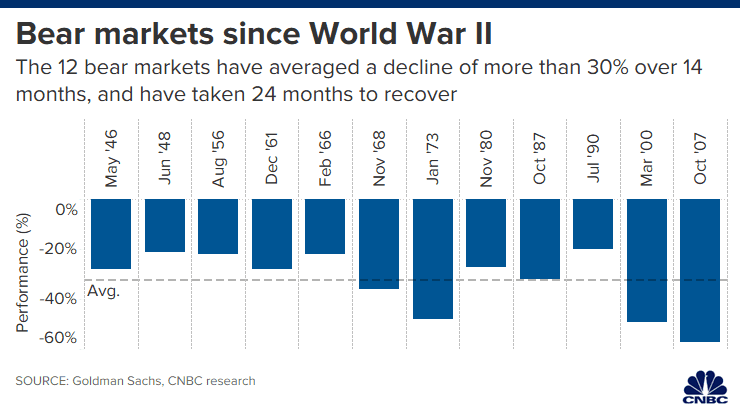

I did not panic, I trust, and was not trying to time, in the usual sense. By May 11 all of our equity fund holdings were back to breakeven or abovewater (except for FRIFX, not a huge portion). I projected that this plague was going to be much worse and longer-lived than most were saying, which has turned out to be the case. (I'd lost to covid at end March my oldest college friend, of 55y nonstop acquaintance, healthy etc. --- a jarring, sudden-enough death.) I believed the economic impact was going to be much worse than predicted, including crippled consumer spending. Turned out to be only partly the case; certainly the latter did not occur. All this thinking of mine was informed by extensive reading and some crude numbercrunching. I thought if we could avoid a >20% monthslong / yearslong drop in this early stage of our retirement we would be better off. So as with so much in life I regret it only in hindsight.... can understand where you are coming from. If I panicked in March 2020, I would have missed out on a huge finish to 2020. I know we can't time the market ...
Without liquidating or otherwise monetizing their homes (if any) many people have virtually no assets to live on.The median respondent that died in their 60s had about $3,000 in liquid investments within two years of their passing, which increased to $10,000 for respondents that died in their 70s and $15,000 for those that died in their 80s.
https://news.mit.edu/2012/end-of-life-financial-study-0803Indeed, about 46 percent of senior citizens in the United States have less than $10,000 in financial assets when they die. Most of these people rely almost totally on Social Security payments as their only formal means of support
© 2015 Mutual Fund Observer. All rights reserved.
© 2015 Mutual Fund Observer. All rights reserved. Powered by Vanilla


