
It looks like you're new here. If you want to get involved, click one of these buttons!

Data from Statista. Sometimes Statista provides full data w/o subscribing, sometimes not. So here's the data it presented me:Between the end of 2019 and its peak headcount in 2022, the company nearly doubled in size to some 87,000 employees.
that it had cash - cross check that with SVB and why startups were pulling cash out of their bank accounts. Their cash spigots were drying up.The [Meta] hiring sustained its ambitious (and in some cases seemingly ill-fated) projects like its big bet on the metaverse. ...
[T]he deep cuts ... reflect a deeper shift in thinking about the metrics that matter in a tech sector that has long been able to make up its own rules.
During the pandemic, as tech CEOs accelerated their empire building, a massive and growing headcount somehow became equated with a company’s overall health — a sign that it had cash, clout and big ambitions.
Never said any of that, merely pointed out as the article did that the Volcker cure for inflation wasn't all that, and had definite negative consequences. Nor can it be said that only one group of people wants lower rates. Most poor people in the U.S. have little to no savings to collect interest on, and actually have more variable-rate credit card debt that increases their burden as rates rise:https://bankrate.com/banking/savings/emergency-savings-report/#over-1-in-3But the chance for an average saver to get a safe return of 5-6% on their money will raise Maggie Thatcher from the dead, legitimize neocolonial revanchism, bring back the Cold War order, destroy unions that no longer exist, and, wait for it, throw people out of work.
Ultimately, rate cuts are economically stimulative while raising rates constricts. There needs to be consideration on both sides of the consequences. And you yourself by acknowledging labor has little power today compared to the 1970s have pointed out the reason we shouldn't perhaps be too fixated on raising rates too high.Over a third (36 percent) of people have more credit card debt than emergency savings, the highest percentage in 12 years of Bankrate asking this survey question. In comparison, 22 percent of people had more credit card debt in January 2022, while 28 percent of people had more credit card debt in January 2020, before COVID-19 began to affect the U.S.
https://cnbc.com/2023/03/14/stock-market-today-live-updates.htmlIn recent days, a crisis in the financial sector has centered around regional banks as Silicon Valley Bank and Signature Bank collapsed, both casualties of poor management in the face of eight interest rate hikes by the Federal Reserve in the last 12 months. Wednesday morning attention turned to the big banks with shares of Credit Suisse hitting an all-time low.
Saudi National Bank, Credit Suisse’s largest investor, said Wednesday it could not provide any more funding, according to a Reuters report. This comes after the Swiss lender said Tuesday it had found “certain material weaknesses in our internal control over financial reporting” for the years 2021 and 2022.
As Credit Suisse dragged down the European Bank sector, U.S. big bank shares declined in sympathy. Citigroup and Wells Fargo shed 3%, while Goldman Sachs and Bank of America fell 2%. The Financial Select Sector SPDR Fund lost 2.9% in premarket trading, giving up its 2% pop on Tuesday.
Regional Banks, whose rebounded helped lift sentiment for the broader market on Tuesday, fell back into the red again. The SPDR S&P Regional Banking ETF (KRE) was down 3% in the premarket, led by losses in Old National Bancorp, Zions Bancorp and Fifth Third Bancorp. To be sure, shares of First Republic Bank were clinging to gains.
Credit Suisse on Tuesday published its annual report for 2022 saying the bank had identified "material weaknesses" in controls over financial reporting and not yet stemmed customer outflows.
Switzerland's second-biggest bank is seeking to recover from a string of scandals that have undermined the confidence of investors and clients. Customer outflows in the fourth quarter rose to more than 110 billion Swiss francs ($120 billion).https://reuters.com/business/finance/credit-suisse-shares-drop-fresh-record-low-cds-widen-2023-03-15/
Oakmark funds sold their remaining shares last week.
As for labor having much power, it is a shadow of what it was in the 1970s:The economic results of this counterrevolution were far from unambiguous. Growth in the early 1980s slumped. Entire industrial sectors were rendered uncompetitive by soaring interest rates and surging exchange rates. Unemployment hit postwar records. It was painful, but on the conservative reading there was, as British Prime Minister Margaret Thatcher liked to say, no alternative. If the struggles of the 1970s had continued, she suggested, the result would have been a slide toward ever more rapid inflation and threats to the institutional status quo. Ultimately, the Cold War order was in peril, and if avoiding that fate required turning monetary policy into a more blunt-force form of political struggle, then so be it. In fighting the mineworkers into submission in 1984-85, she was waging war on enemies within, as she waged war on the Soviet enemy without. The prize was nothing less than a permanent shift in the balance of social and economic power and the exclusion of alternatives to the rule of private property and markets.
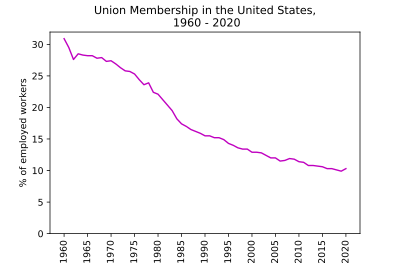
There are a number of I think mistaken assumptions in your post. One is that the wealthiest keep most of their money on deposit. The more money someone has, the more risks they can take with that money to keep up with inflation. It is the middle class and poor who need to keep most of their assets in bank accounts, not the wealthiest, as the middle class and poor need to have liquid capital in case of emergencies. A wealthy investor can afford to tie their money up for several years in far less liquid but very lucrative investments with returns that exceed inflation.But you might make an argument that inflation harms the wealthy more than the working class.
That assumes the poorest people's wages keep up with inflation. That is often not the case as the unskilled or low-skilled labor have the least bargaining power when it comes to wages. If you're not making more money to pay back the fixed amount of debt, that doesn't work. Moreover, much of the debt poorer people often assume like credit card debt is often variable rate that rises with interest rates and inflation.On the other hand, if you have lots of debt (assuming at a fixed-rate) you are helped by inflation as you pay back the debt with cheaper dollars.
My grandfather used to say the business cycle was driven by how long it took to forget lessons learned the hard way. He rolled up banks working for The Comptroller of the Currency during the Great Depression.It’s easy for investors to dismiss the ripples from the collapse of Silicon Valley Bank SVIB as contained and nothing to worry about when it comes to a broader portfolio.
But if there’s one thing to know about banking crises, it’s that they are never just about the banks. They may start there, but they don’t end there. Easy financial conditions tend to lead to higher risk-taking and a complacency that long-established patterns will continue. Until they don’t.
As Warren Buffett has been known to observe, only when the tide goes out do you see who’s been swimming naked.
The Worry Is Fear
The failure of two major regional banks since Friday threatens to erode investor and consumer confidence to a degree that could spiral in unexpected ways. And with inflation still raging at the highest levels in 40 years and the Federal Reserve raising interest rates at the most accelerated pace since those years, things are starting to break.
“The worry is about fear,” says Tim Murray, capital markets strategist for multi-asset portfolios at investment manager T. Rowe Price.
In good times, too, policymakers get lax and tend to feel like it is safe to repeal or reduce important protections designed to prevent systemic events and consumer safeguards.
https://www.washingtonpost.com/business/2023/03/13/svb-crisis-backstop-revives-the-specter-of-moral-hazard/bb2731c6-c188-11ed-82a7-6a87555c1878_story.htmlDepositors with big cash holdings are – reasonably – expected to be aware of the risks and spread their cash around several institutions. Businesses backed by venture capital, such as the customers of SVB, ought to have been advised how to manage their liquid holdings.
... the sight of depositors being made whole ... provides a disincentive for both depositors and banks to be prudent. There’s no reward here for SVB customers who banked more carefully.
https://scholarworks.umt.edu/cgi/viewcontent.cgi?article=10130&context=etdA good first step... would be to cease the present practice of fully paying out uninsured depositors when bank failures occur. This practice, of course, is de facto insurance [emphasis in original] ... Paul Duke, Jr. reports that "many [bankers] support proposals to give depositors a 'haircut' a 10% of 15% loss on deposits above the [FDIC insurance limit] — when a bank fails. Two of banking's biggest guns, Citicorp Chairman John Reed and Chase Manhattan President Thomas Lebrecque, support variations of this proposal (WSJ, Aug 3, 'S9, A16). ... Such a shift in policy should not encounter insuperable opposition since it falls far short of enforcing the insurance limitations which legally already exist.
Since the Continental Illinois bankruptcy the federal banking and S&L authorities have adopted a too—big—to-fail policy. The policy is closely related to the unwritten policy of rescuing any faltering American corporation if it is large enough. The most notable cases so far have been Continental Illinois and Chrysler.
...In the beginning this de facto extension of coverage only applied to the banks and S&Ls which were large enough to have a wide financial influence. ... only the eleven largest banks were originally covered, hence the designation "too-big—t o—fail". The government however was rightfully criticized for this policy on the grounds that it put smaller banks at a competitive disadvantage, so, to correct this inequity the government has for several years made it a general policy to pay off all depositors in both large and small failed banks.
© 2015 Mutual Fund Observer. All rights reserved.
© 2015 Mutual Fund Observer. All rights reserved. Powered by Vanilla


