Here's a statement of the obvious: The opinions expressed here are those of the participants, not those of the Mutual Fund Observer. We cannot vouch for the accuracy or appropriateness of any of it, though we do encourage civility and good humor.
Support MFO
Donate through PayPal
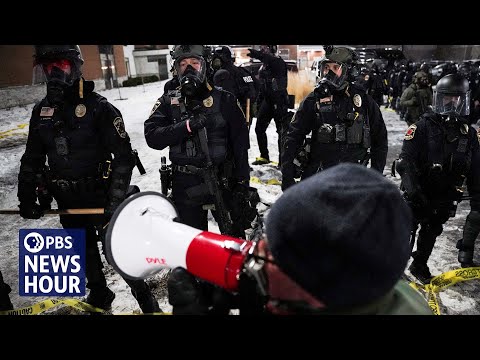
PBS segment on potential for U.S. civil war January 27
@Hank. Jeez,,, that is the sort of provocative title I would have posted with that piece. And the title would have been to justify not being in off topic. Well played Hank. And depending on how things go, Minneapolis may end up being the Fort Sumter of the second Civil War…. He might Taco or Miller may tell him to keep piling on until he is able to crush the nation wide opposition and consolidate power. Get ready for March 28. Mark your calendar.
But you fail to address the possible investment implications. I have to believe they would be significant. This may well end up in the off-topic area where you seem to think it belongs.
I first thought this might have investment implications. Posted it briefly under "other investing" with an investment appropriate caption. Was hoping for maybe a circumspect analysis of how it would play out in the markets. I now believe it's better suited for "off topic" where right & left can go at it.
@ Hank. Speaking only for myself, I think the nexus of our investments and the political crisis belongs right here , on the front page. Not name calling but a sober discussion about the increased risks caused by the end of the rule of law.
@ Hank. Speaking only for myself, I think the nexus of our investments and the political crisis belongs right here , on the front page. Not name calling but a sober discussion about the increased risks caused by the end of the rule of law.
Thanks Larry. You done good. Don't mean to fault you for my changing the posting category. It's very hard to step back and try to view current events from a non-partisan perspective, so entrenched are feelings on both sides. So IMHO this was doomed to fail as an investment topic.
If a civil war were to break out I doubt that I'd be considering what the markets are doing or going to do and what should I be doing with my money. None of these would be at the top of the stack of my concerns, they just wouldn't.
Agree. We will be busy surviving the war. Watched Ken Burns’s civil war film many years ago and it still haunts me of what people had to do from day to day.
The economy will continue to operate in some fashion come hell or high water / war or peace. Humans require shelter, food, transportation. They need gainful employment and compensation (or a store of value if retired). They need a means of exchange. There's quite a lot written on how the Civil War affected the U.S. economy. Generally, it was highly stimulative for the North and had the opposite effect on the southern states. Industrialization seems to have ramped up during this period, especially in the North.
The Civil War Economy and Its Effects on the Stock Market
"Railroad Stocks and Manufacturing Booms - As the Union mobilized, certain sectors benefited from massive federal contracts: Railroads: Vital for troop movement and supply routes. Stocks in major rail lines like the New York Central saw periods of sharp appreciation, though accompanied by risk. If a Union defeat seemed likely, shares could plummet overnight."
"Arms and Logistics: Companies manufacturing rifles, uniforms, or telegraph equipment enjoyed robust demand. While the official “stock market” was still modest, these shares often traded at a premium, harnessing war-time profits."
"Yet the unpredictability of battles caused volatility. A Confederate victory in a major engagement, like the Second Battle of Bull Run, might spark a panic in New York’s financial district as fear overshadowed rational valuations."
"Speculative Frenzies - With greenbacks fueling the war machine, some investors embarked on speculative frenzies in areas tangentially connected to the conflict—mining stocks (anticipating higher metal demand), shipping lines, or even newly chartered banks. This mirrors a consistent pattern in American history: times of crisis can spur short-lived bubbles, leading to quick gains for a bold few and heartbreak for many more."

Comments
https://verifiedinvesting.com/blogs/education/abraham-lincoln-war-greenbacks-and-the-shifting-tide-of-american-finance
The Civil War Economy and Its Effects on the Stock Market
"Railroad Stocks and Manufacturing Booms -
As the Union mobilized, certain sectors benefited from massive federal contracts:
Railroads: Vital for troop movement and supply routes. Stocks in major rail lines like the New York Central saw periods of sharp appreciation, though accompanied by risk. If a Union defeat seemed likely, shares could plummet overnight."
"Arms and Logistics: Companies manufacturing rifles, uniforms, or telegraph equipment enjoyed robust demand. While the official “stock market” was still modest, these shares often traded at a premium, harnessing war-time profits."
"Yet the unpredictability of battles caused volatility. A Confederate victory in a major engagement, like the Second Battle of Bull Run, might spark a panic in New York’s financial district as fear overshadowed rational valuations."
"Speculative Frenzies - With greenbacks fueling the war machine, some investors embarked on speculative frenzies in areas tangentially connected to the conflict—mining stocks (anticipating higher metal demand), shipping lines, or even newly chartered banks. This mirrors a consistent pattern in American history: times of crisis can spur short-lived bubbles, leading to quick gains for a bold few and heartbreak for many more."