
It looks like you're new here. If you want to get involved, click one of these buttons!
I decided years ago to stop using ALT funds. They are not reliable and inconsistent. I developed my own timing system(link) that worked very well for me. I started practicing it in 2013.Thanks FD. Yes $2500 min at Fido. And one more “fund performance site” to add to my collection and further mess with my brain.
All you got to do is check it out. Fidelity and Schwab have only $2500 min.FARIX seems like an interesting fund, but it has a $1 million minimum investment.
Since we are now in the new environment where rates are rising, I think it would be great to open a separate thread on buying and selling Agency bonds instead of bond funds.Just an FYI - on the question of commissions, most brokerages appear to charge a commission (e.g., 0.01%) in buying and selling Agency bonds. Today, Agency short term bonds were yielding nearly 50 pbs higher than Treasuries of the same maturities. If there is a wider interest in exploring Agency debt, we should open a separate thread to keep this thread on topic.
A parade of prominent investors and corporate executives have made it clear that they believed the worst was yet to come for the economy and financial markets.
After hitting a low in June, the S&P 500 had rallied more than 17 percent into mid-August, before losing steam again. The sell-off this week leaves the index just 5.6 percent above the bottom reached in June, after a fall of 0.7 percent on Friday that brought its weekly losses close to 5 percent. The market has only dropped 5 percent in a week three times this year.
Yet even after the swift decline this week, some of the most powerful trading houses in the world, deploying trillions of dollars on behalf of pension funds, governments and other investors, are warning that there is more pain ahead.
“If you asked me a year ago, ‘What is the worst scenario for financial markets?’ I think things are now worse than anything we could have imagined,” said the head of Norway’s sovereign wealth fund, the largest of its kind. The fund manages money generated by Norway’s extensive oil and gas sales and has $1.4 trillion invested around the world.
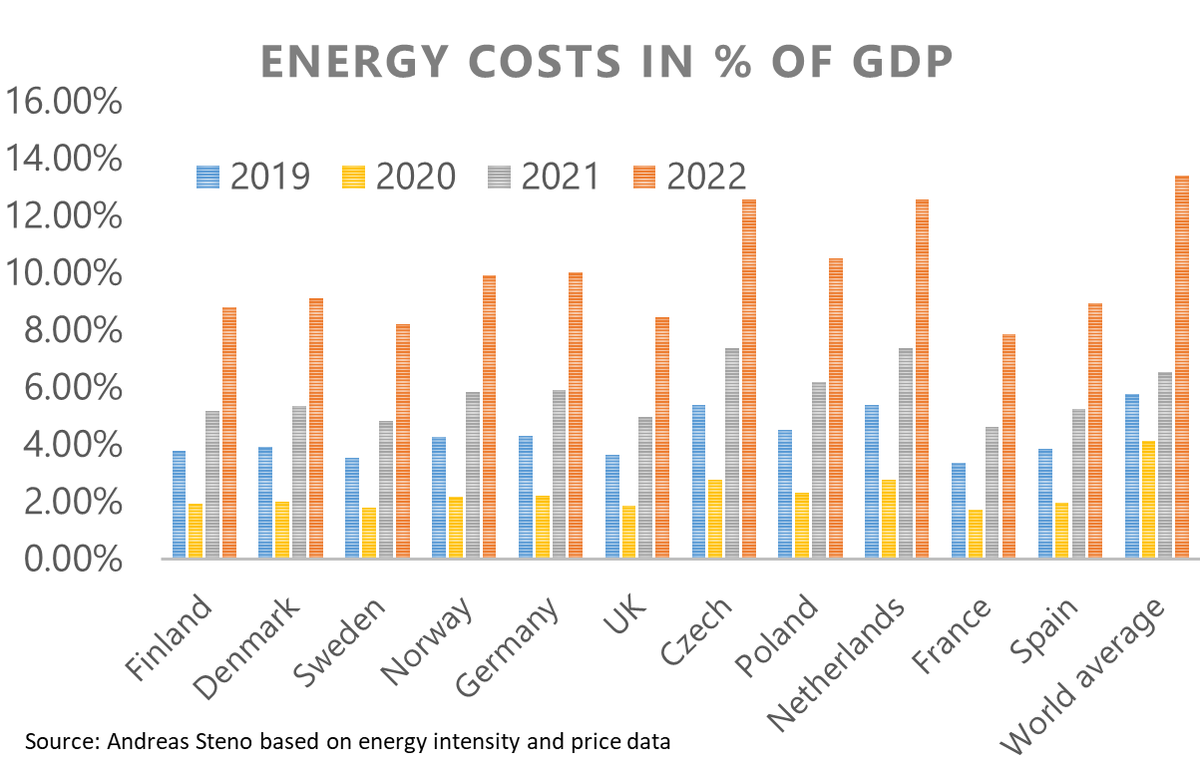
Business leaders, policymakers and ordinary Americans are all grappling with the end of a decade of rock-bottom interest rates that helped propel the economy after the 2008 financial crisis, and a shift to a much-less familiar, once-in-a-generation burst of inflation. Crimped supply chains, the war in Ukraine and an emerging energy crisis are among a host of challenges that add to a level of uncertainty that some investors say they have not seen in decades.
The drop on Friday came as the stock of logistics giant FedEx cratered more than 21 percent, after it warned that its profit was being hit by weakness in Asia and Europe. FedEx said that it would cut some services, close locations and freeze hiring, becoming the latest in a string of companies that have gone public with their concerns and rattled investor confidence.
FedEx is seen as an economic bellwether because its package shipping business reflects both business and consumer demand. On Thursday the company’s chief executive predicted a “worldwide recession.”
General Electric’s chief financial officer also warned of challenges, bemoaning lingering supply chain issues that remain “tough” and “impair our ability to deliver to our customers.”
Economic worries were also evident in other corners of the financial markets: Corporate debt prices fell and oil prices notched a third straight week of losses.
Mr. Tangen, of Norway’s sovereign wealth fund, said that he did not think there was an investment area anywhere in the world likely to make money in the near future. “That’s the really depressing thing,” he said.
© 2015 Mutual Fund Observer. All rights reserved.
© 2015 Mutual Fund Observer. All rights reserved. Powered by Vanilla


